The True ROI of Custom Software vs Off-the-Shelf Tools

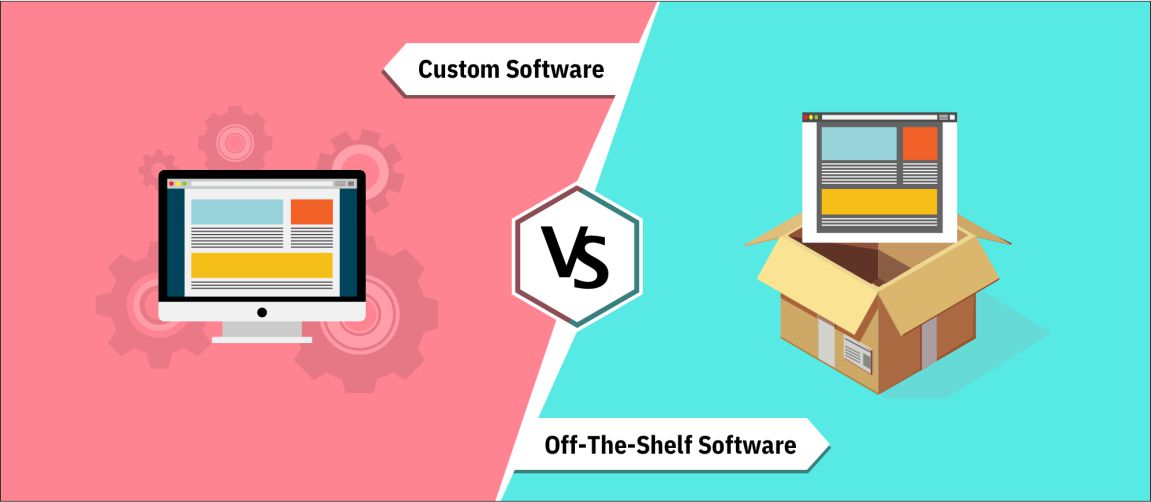
Introduction When it comes to choosing software solutions for your business, decision-makers often find themselves torn between two options: building custom software tailored to their unique needs or buying off-the-shelf tools that are ready to use. While off-the-shelf solutions offer quick deployment and lower upfront costs, custom software can offer long-term value and scalability. So which one delivers better Return on Investment (ROI)?
This blog explores the real ROI of custom software development versus off-the-shelf tools, helping business leaders make informed decisions based on cost, performance, flexibility, and future growth.
1. Initial Cost: The Myth of Cheaper is Better Off-the-shelf tools often appear cost-effective at first glance:
However, hidden costs like licensing upgrades, user limits, and integration fees often surface later. In contrast, custom software has higher initial development costs but no recurring licensing fees and is tailored to your specific needs.
ROI Insight: While off-the-shelf tools save money upfront, custom software offers better value over time by eliminating repetitive licensing and scaling costs.
2. Time to Market vs Long-Term Efficiency
Off-the-shelf tools can be deployed quickly, making them suitable for urgent needs or MVP testing. But these tools may lack crucial features, forcing teams to adopt inefficient workarounds.
Custom software takes longer to develop initially but is designed for optimal workflow integration, improving employee efficiency and reducing repetitive tasks.
ROI Insight: Custom software wins in long-term productivity gains, especially when your business has unique workflows or growth plans.
3. Scalability and Flexibility
Off-the-shelf tools are often rigid. Customizations may be limited or come with added costs. When your business grows or pivots, these tools may no longer align with your goals.
Custom software evolves with your business. Features, users, and integrations can be added over time without hitting system limitations.
ROI Insight: For growing businesses, the ROI of custom software increases significantly over time due to its adaptability and scalability.
4. Integration with Existing Systems
Off-the-shelf software may struggle to integrate with your existing infrastructure, requiring manual data transfers or third-party connectors. Custom solutions are built to seamlessly integrate with your ERP, CRM, accounting tools, or proprietary databases from day one.
ROI Insight: Integration costs and inefficiencies can erode the savings of off-the-shelf tools, giving custom software a higher integration ROI.
5. Ownership and Control
With off-the-shelf tools, you’re at the mercy of vendor updates, pricing changes, or even discontinuation. Data ownership and security can also be concerns.
Custom software gives you full ownership. You control updates, features, and data storage — a major advantage in regulated industries.
ROI Insight: Long-term control over your software can be a strategic advantage, especially in finance, healthcare, and enterprise settings.
6. Security and Compliance Off-the-shelf tools cater to general security needs, which may not align with your industry’s compliance requirements (e.g., GDPR, HIPAA, RBI regulations).
Custom-built software can be developed with industry-specific security and compliance protocols built in from the start.
ROI Insight: Avoiding fines, breaches, or legal issues makes custom software more cost-effective for compliance-heavy businesses.
7. User Experience (UX) and Adoption
Generic tools often overwhelm users with unnecessary features or lack essential functions. This can lead to poor adoption and productivity losses. Custom software is built around your users’ specific tasks and needs, improving usability and reducing training time.
ROI Insight: Higher user satisfaction and faster onboarding translate into measurable productivity gains.
. Support and Maintenance
Off-the-shelf solutions rely on third-party support that may be slow or impersonal. You have limited control over how quickly bugs are fixed. Custom software comes with dedicated support, quicker issue resolution, and proactive updates tailored to your environment.
ROI Insight: Faster support and fewer disruptions improve uptime and team efficiency, maximizing software ROI.
9. Competitive Advantage
Off-the-shelf tools offer what everyone else has. They rarely become a differentiator.
Custom software can give your business a unique edge — through automation, better insights, or client-specific features that your competitors don’t have.
ROI Insight: Strategic advantage gained from custom tools can drive revenue and customer retention.
Conclusion: Which One is Right for You?
The true ROI of custom software goes beyond just cost — it’s about performance, adaptability, control, and strategic impact. While off-the-shelf tools may serve you now, custom software can serve you better as you grow.
2nd Floor, Anna Chowdhari Estate, Renuka Niwas, Sr. No. 2/1, near Malawadi Warje Flyover, Warje, Pune, Maharashtra 411 058
+91 7385204165